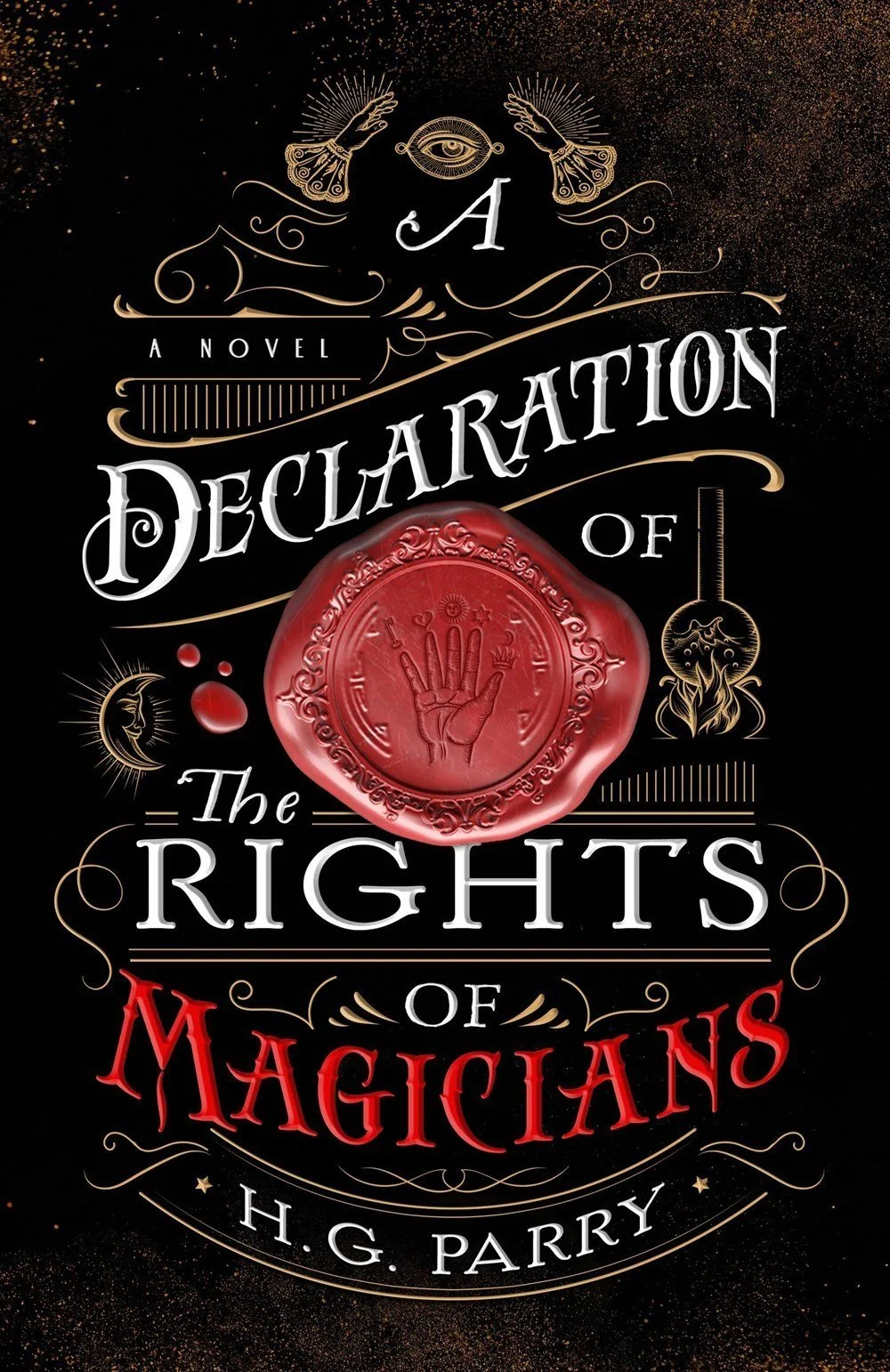
A Declaration of the Rights of Magicians
H.G. Parry

Reviewed 5-16-2026
Set in the late 1700s, the story takes place in an alternate history where magic wars are a thing of the past and powers are regulated by bracelets and law. For most of the story, you’re seeing behind the scenes of lawmaking. Speeches, votes and underhanded political tactics are the name of the game. It’s not very exciting, but it is interesting. Their way of speaking isn’t hard to follow, despite the time period and the integration of magic into the story feels natural. It’s just another thing to debate for these people, but it does lead to some interesting events.
Pitt and Wilberforce are British Parliament members. Their parts of the story usually revolve around changing the government to be more accommodating to commoner magicians. Despite magic flowing through many types of people, only aristocrats can use their powers freely, for the most part. This is the case for most of the world, though the newly founded United States allows anyone to practice magic in their daily lives. Most of the world has signed the Concord, which prevents the use of magic in war, because of the Vampire Wars that ravaged Europe years ago. As a result of that history, the bracelet system was created to control the general populace. Wilberforce is fighting to end slavery, and Pitt supports him, though he’s the Prime Minister so he has to refrain from showing favoritism and maintain priority in government proceedings. Slavery in this story is a huge plot point because slaves are given a magical potion that forces them to obey and makes them prisoners of their own bodies. You wouldn’t think that slavery as a concept could get worse, but being conscious and unable to control your own body sounds like a whole new kind of hell. This remains the priority for Wilberforce, but a stirring unrest in France forces Pitt to reprioritize.
Maximilien Robespierre is a French revolutionary, well not at the start. He’s a simple lawyer, fighting for the rights of commoner magicians. Then he’s visited by a strange man in his dreams, promising to give him the power to make real change. After little debate, Robespierre decides to work with the man to change France for the better. A means to an end. Without knowing the end game of his new benefactor, he plays along, which I can sympathize with. If someone were to appear and offer you the power to change the world, wouldn’t you take it with minimal questioning? I totally would. Everyone wants to make a difference, and Robespierre didn’t mind his attorney work, but longed to make more substantial changes. Through his new power and connections, things escalate. Gradually, Robespierre’s story becomes more complex and morality becomes a huge question. Is all of this really worth it?
Fina is a slave, kidnapped from Africa and forced to work on a plantation in Jamaica. She was seven when she was taken and forced to drink the subservience potion. From then until her late twenties, she’s been unable to control her own body. It’s a horrific version of slavery that I could not believe the world governments allowed. Her chapters were more tame than I was expecting, but still stoked my own personal fire for revolution. Despite the potion, slaves can sometimes speak to one another each night for a few moments, though many don’t have the strength to break through the spell. They hear about an uprising of slaves that are attacking plantations, stealing slaves and setting them free. Fina and the others hold on to the hope of rescue, because that’s all they have. Jamaica is a French colony though, and Robespierre’s pursuit of a better France could impact Fina’s story if he gets his way.
These different perspectives help give an encompassing view of the story. Seeing it from different sides gives it more depth. Most of the story is conversational debates, but the banter is witty and at times humorous to keep it from being too dull. It’s definitely not a story that everyone will find interesting. If you like to ponder how a fantastical concept would affect the real world, this story considers this aspect with confidence. The intricacies of magic in society and the ramifications of its use in previous wars influence the law in meaningful ways. The novel’s use of real historical figures and events helps ground the story, painting those events in a new light. It’s kind of a historical fiction in that way, so if you like alternate tellings of history, this one’s for you.